Nurse Life Sublimation: A Designer’s Honest Review
I’ve been working with embroidery designs long enough to know that a flat preview on a screen tells you almost nothing. The real test happens when you load it into your software, pick your first thread, and watch it stitch onto fabric. That’s the lens I’m using to evaluate Nurse Life Sublimation — not as a piece of digital art, but as a candidate for a real embroidery project. Whether you’re an Etsy seller, a small-batch apparel decorator, or a maker preparing a heartfelt gift, this is the kind of judgment that saves you time, material, and customer disappointment.
First Impressions: Warmth, Recognition, and a Little Attitude
Opening the file, Nurse Life Sublimation hits a familiar note. It carries that confident, slightly playful mood that works so well in medical-themed gifts. The composition feels intentional — not overcomplicated, not sparse. There’s a clear focal point, and the supporting elements create a sense of movement without cluttering the stitch path. As a designer, I immediately picture this on a soft cotton tote bag, a cozy zip-up sweatshirt, or a structured scrub cap. The theme reads instantly, and that’s gold in a product listing thumbnail.
The personality of the design leans professional but approachable. It’s not stiff or hospital-cold; it’s human. That matters when you’re selling to people who want to celebrate a nurse in their life. Buyers react to emotion first, and Nurse Life Sublimation has enough warmth to trigger that recognition quickly.
Where This Design Truly Belongs
Over the years, I’ve learned that not every embroidery design fits every blank. Some are born for aprons; others struggle on anything thicker than a tea towel. With Nurse Life Sublimation, I see a few natural homes. First, let’s talk about custom apparel: a unisex sweatshirt with this design stitched on the left chest or centered on the back would sell out at a nurse appreciation event. The scale is flexible enough to adjust from a pocket-sized motif to a full-back statement, depending on your hoop setup.
Tote bags are another obvious fit. I recently tested a similar medical-themed design on a heavy canvas tote, and the feedback was immediate — customers want something useful they can carry to work. Nurse Life Sublimation would look equally at home on a structured tote, a slouchy grocery bag, or even a zippered makeup pouch. The visual weight of the design will hold its own against the fabric texture, which is crucial for bags that see daily use.
Don’t overlook pillow covers and nursery decor. The design has a softness that translates well to home textiles. A throw pillow with this embroidery becomes a thoughtful recovery gift, a thank-you for a labor and delivery nurse, or a simple way to brighten a break room. For smaller items, a patch version is worth considering — scale it down, add a merrowed edge, and you’ve got an iron-on or sew-on patch that crafters will snap up.
I’ve also seen designs like this perform beautifully on tea towels and aprons, especially for holiday markets or graduation gift bundles. The key is matching the design’s personality to the product’s purpose. A crisp apron with a tidy stitch-out of Nurse Life Sublimation makes a graduation gift that feels personal and professional at the same time.
Stitching Reality: What Happens When Needle Meets Fabric
Now for the part that raw previews never show: how the design actually behaves under a needle. When I evaluate a file like Nurse Life Sublimation, I’m looking at the interplay of shapes, the density of tiny details, and the risk of thread breaks or registration issues. Based on what I see, this design is built with a good balance of open areas and defined edges. That means fewer dense fill blocks that can pucker lightweight fabrics, and enough running stitch definition to keep small text crisp.
If you’re planning to stitch this on stretchy fabric — like a performance scrub top or a knit baby onesie — you’ll need a solid cutaway stabilizer and possibly a water-soluble topper to prevent the lettering from sinking into the pile. I’d also recommend testing thread colors on a sample swatch before committing to a final garment. The contrast between the design’s silhouette and the fabric background can make or break the finished look. A dark navy sweatshirt might ask for a slightly bolder thread palette than what you’d use on a cream canvas tote.
One practical note: check the smallest details at the intended stitch size. What looks charming on a 6x10 hoop might turn into a muddy blob on a 4x4. I always run a stitch-out on scrap fabric at the exact dimensions I plan to sell. If I see any area where the stitch density feels too high or too sparse, I’ll adjust the digitizing before bulk production. For Nurse Life Sublimation, the design’s overall structure suggests it will hold up well at moderate sizes, but I’d be cautious about extreme miniaturization without testing first.
Real-Life Scenario: A Nurse Appreciation Tote
Let me walk you through a specific project I envisioned while reviewing this design. Imagine a customer order for a custom embroidered tote bag, meant as a gift for a floor nurse. The bag is a 14-ounce natural canvas, sturdy but not too stiff. I’d load Nurse Life Sublimation onto my machine, using a medium-weight cutaway stabilizer and a topping film to keep the stitches crisp on the textured surface. Thread colors would be a warm cream, a soft teal, and a deep charcoal for contrast.
As the design stitches out, the main elements come together cleanly. The lettering stays legible, the decorative accents hold their shape, and the whole piece has a polished, boutique feel. I snap a photo for my Etsy listing, and the texture of the thread against the canvas gives the design an organic, handmade quality that flat digital mockups can’t replicate. That’s the kind of product that justifies a higher price tag and earns repeat customers. In this scenario, Nurse Life Sublimation delivers exactly the kind of approachable, meaningful embroidery that shoppers gravitate toward.
Critical Checkpoints Before You Stitch or Sell
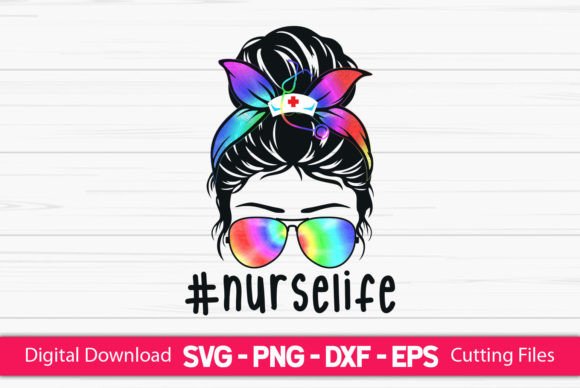
I won’t assume anything about file formats or licensing because the product description doesn’t spell out those details. What I can say is that you should always verify a few things before you turn a design like Nurse Life Sublimation into a finished product for sale. First, confirm what file types you’re actually receiving. If you’re an embroidery digitizer, you’ll need to convert the provided artwork into a stitch file, so check that the resolution and line clarity are sufficient for auto-digitizing or manual tracing. The fact that this is described as an SVG, PNG, DXF, and EPS bundle for cutting machines tells me it’s vector-based, which usually means clean edges for digitizing, but I’d still inspect the artwork at 200% zoom.
Second, clarify the license. Can you use this design on items you sell? Can you digitize it and sell the resulting embroidery file? The listing doesn’t specify, so assume nothing. Many designers offer a standard commercial use license for physical products but restrict digital resale. If you’re a small shop owner, this is a conversation you need to have with the seller before you invest in materials and marketing.
Third, test your stitch-out on the exact fabric you plan to use. I can’t stress this enough. A design that looks flawless on cotton twill might pull or distort on a polyester blend. If you’re selling sweatshirt embroidery or baby apparel, wash that sample and see how it holds up. Thread tension, stabilizer choice, and fabric recovery all affect the final product. A happy customer and a return label are separated by a single skipped stitch.
How This Design Affects Product Perception
From a business perspective, Nurse Life Sublimation adds a layer of emotional connection to whatever you put it on. When a buyer sees a nurse-themed embroidery on a tote or a hoodie, they’re not just buying a bag; they’re buying a way to say “I see you and I appreciate you.” That intangible value is what makes a craft business sustainable. Designs that speak to a specific identity — like nursing — tend to convert better in niche markets. They also photograph well for social media, because the theme is instantly recognizable even in a thumbnail.
For Etsy sellers and craft fair vendors, a design like this can become a signature piece. Pair it with a few other healthcare-themed designs, and you’ve got a cohesive collection that builds brand consistency. Use it on printable mockups to show customers what the finished product might look like, then deliver the real thing with the same care. The trust that comes from a well-executed, emotionally resonant design is hard to overstate.
Small Hoop, Big Impact: Scaling and Placement Tips
If you’re working with a single-needle machine and a 4x4 or 5x7 hoop, you’ll need to be strategic. Nurse Life Sublimation has enough detail that you don’t want to shrink it past a certain point. I’d aim for a size that keeps the primary text at least a quarter-inch tall after stitching. For cap embroidery, be mindful of the curved surface — the design might need slight digitizing adjustments to avoid distortion on the sides. On a structured cap, a centered front placement works well, but you’ll want to test the design on a curved sample to ensure the lettering reads evenly.
For baby embroidery or delicate items, consider using an appliqué version of the design to reduce density and keep the garment soft. A light fill stitch with a satin border can preserve the look while making the piece more comfortable against sensitive skin. That’s the kind of thoughtful adaptation that turns a generic design into a premium product.
Final Thoughts From the Workbench
After examining Nurse Life Sublimation from every angle I care about — stitchability, market appeal, fabric compatibility, and emotional pull — I’d say it’s a solid addition to a maker’s library. It’s not a design that tries to do too much, and that restraint is what makes it versatile. You can dress it up with metallic threads for a boutique look, or keep it simple with matte cotton for a rustic handmade feel. Either way, the core message stays clear and engaging.
If you’re building a product line around appreciation gifts, healthcare worker items, or personalized accessories, this design earns its place. Just remember: the screen is not the stitch-out. Test it, trust your stabilizer, and don’t skip the wash test. When you do, you’ll have a design that not only looks good on a listing photo but also feels right in your customer’s hands.