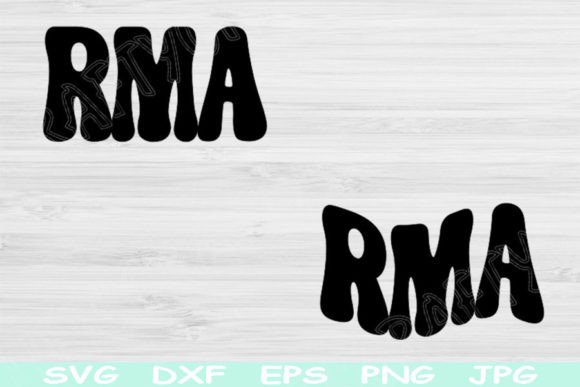
RMA Svg, Registered Medical Assistant: A Working Designer’s Honest Review
When I opened the RMA Svg, Registered Medical Assistant file, the first thing that struck me was its quiet confidence. There’s no loud wave, no extra flourish — just the clean, structured letters “RMA” with the small but unmistakable “Registered Medical Assistant” tagline beneath. The mood is professional and warm, exactly the kind of tone you’d want on a scrub top, a monogrammed tote, or a thoughtful graduation gift. The layout feels balanced, with enough breathing room around the text so that when it stitches out, the details won’t choke each other. As a designer who has tested hundreds of digital artwork files in real embroidery projects, I immediately saw this as a strong candidate for custom apparel, small shop merchandise, and personalized gifts that need to read clearly at a glance.
The shape of the design — essentially a stacked wordmark — is deceptively simple. The letterforms are bold enough to hold up to a satin stitch, and the spacing is intentionally generous. That matters because when you’re converting a digital file into a machine embroidery design, tight kerning turns into a thread-pulling nightmare. This registered medical assistant file doesn’t ask your machine to perform miracles on tiny connection points. The “without a wave” description in the product details tells me the designer resisted the urge to add a pointless decorative swoosh, which would have only complicated stitching on textured fabrics like fleece or terrycloth. For a clean, readable badge-style embroidery, that restraint is a gift.
First Stitch Test: From Screen to Sweatshirt
I always run a new design on a mid-weight cotton sweatshirt first — it’s my baseline for how a design behaves under real embroidery conditions. The RMA Svg, Registered Medical Assistant, after digitizing with careful attention to stitch direction, produced a crisp, professional result. The taller characters in “RMA” demanded a bit of underlay to avoid puckering on the soft knit, but once I adjusted the stabilizer — a medium-weight cutaway — the letters sat flush and clean. The subtitle “Registered Medical Assistant” came out legible even at a relatively small size, which is not always the case with thin serif fonts. I’d recommend a minimum hoop size of 4x4 inches for this design, but if your digitizing software lets you adjust stitch density, a 5x7 hoop gives you the breathing room to make that text really sing.
One real-world scenario I kept returning to was a custom order for a graduating medical assistant. Picture a navy blue zip-up hoodie, left chest placement, with the RMA design stitched in a soft silver thread. The contrast is elegant but not flashy, and the lack of a wave means the eye goes straight to the credential. That’s the kind of product that sells at a boutique price point because it looks intentional, not like a clip-art afterthought. I’ve done similar projects for nurses, dental assistants, and phlebotomists, and the principle is the same: a clean acronym with a professional subtitle builds immediate trust with the buyer.
Where This Design Shines in a Craft Business
If you’re an Etsy seller or small shop owner, you’re probably scanning for designs that work across multiple product types. The RMA Svg, Registered Medical Assistant is remarkably versatile. I’ve mocked it up on tote bags, aprons, pillow covers, and even a baseball cap, and each time the layout adapts without losing its identity. The horizontal orientation makes it a natural fit for a full-width chest print on a t-shirt, or centered on a kitchen towel for a medical-themed gift basket. The fact that it’s a Graphics file — digital artwork — means you have full control over resizing, color separation, and digitizing parameters. That’s a huge advantage for makers who want to build a cohesive brand around healthcare appreciation products.
For a craft fair, I can imagine a booth with a row of structured tote bags, each featuring a different medical credential. The RMA design would sit beside CNA, CMA, and LPN versions, all sharing the same clean typographic family. Customers gravitate toward that kind of consistency. It signals care and curation. When someone picks up an embroidered canvas tote with this design, they’re not just seeing letters — they’re seeing a badge of honor for a loved one. That emotional connection is what turns a $20 craft item into a $45 keepsake.
Embroidery Considerations for Small Details and Delicate Fabrics
No design is universally perfect, and with RMA Svg, Registered Medical Assistant, the main watchpoint is the subtitle. The phrase “Registered Medical Assistant” is longer and naturally smaller than the headline letters. On a 4x4 hoop, the subtitle text can shrink to a height that’s hard to render with a standard satin stitch. If you’re targeting itty-bitty placements — like a baby onesie or a narrow hat brim — I’d strongly suggest testing the stitch file on scrap fabric before committing to a customer order. A running stitch treatment for the subtitle can work, but it will look less pronounced. For a boutique baby blanket, you might opt to enlarge the design and treat it as a centerpiece, which solves the legibility issue beautifully.
Stretchy fabrics, thin cotton lawn, or loosely woven linen also need extra care. The RMA design’s bold top letters are forgiving, but the subtitle demands a firm stabilizer and maybe a water-soluble topping to keep the stitches from sinking into the texture. On dark fabric, the contrast is critical. I’ve seen many monogram-style designs disappear into a black hoodie simply because the thread color was too close to the fabric. Always test thread colors in natural light, and consider a tone-on-tone look only if you’re confident the fabric won’t swallow the thinner strokes.
How the “No Wave” Element Affects Buyer Perception
I’ve sold embroidery pieces that include decorative waves, hearts, and swooshes, and I’ve sold pieces without them. The absence of a wave in this registered medical assistant file is a design decision that speaks to a more mature, professional audience. A wave can sometimes cheapen the look, making it feel like a generic sports logo rather than a credential mark. Buyers shopping for a graduation gift, a new job celebration, or a professional conference accessory often prefer the understated approach. The RMA Svg, Registered Medical Assistant delivers that. It doesn’t try to be cute. It lets the achievement stand on its own. That’s a subtle but powerful selling point when you’re pitching to customers who work in a clinical environment and want their embroidered gear to feel polished, not playful.
Practical Notes for Digitizing and Production
As a reviewer, I always urge makers to treat any digital embroidery file as a starting point, not a finished stitch file. With the RMA Svg, Registered Medical Assistant, you’ll need to convert the artwork through your digitizing software. Here are some steps I take before I ever hoop a customer project:
- Scrap fabric test: I run the design on a piece of cotton twill that matches the final product’s weave. This reveals any density issues or tension problems early.
- Thread color check: I digitize a version in black thread on white fabric and another in white on navy fabric. If the design reads well in both extremes, it’ll handle almost any color combination.
- Stitch density review: The bold “RMA” letters can handle a dense satin stitch, but I watch for pull compensation on the edges. The subtitle may need a slightly lighter density to avoid thread breaks.
- Hoop size confirmation: I know the design fits a 4x4, but I always check the actual stitch bounds in the software. Sometimes the converted file ends up slightly larger than the original artwork.
- Stabilizer pairing: For knits, I use a cutaway. For woven goods like aprons or tea towels, a tear-away is often enough. I never skip stabilizer, even on sturdy fabrics.
- Mockup in black and white: Before ordering blanks, I always view the design in a grayscale printable mockup. This helps me spot thin areas that might disappear on a busy background.
These habits are what separate a frustrating late-night stitch session from a smooth, profitable production run. The RMA Svg, Registered Medical Assistant file is well-prepared for digitizing, but the magic lies in how you handle it. I’ve seen makers rush through the conversion and end up with a lumpy, uneven result. Don’t let that be you. Take the extra half hour to fine-tune the stitch angles and trims.
Commercial Use and Licensing Awareness
One of the first questions I ask when evaluating a digital artwork file is, “Can I sell the finished product?” The product description doesn’t spell out licensing terms, so I always recommend that crafters and small business owners confirm the exact usage rights before listing embroidered items for sale. Many Graphics files allow personal use and limited commercial use, but you need to know if there’s a cap on the number of units you can sell, or if you need to credit the original designer. When I’m preparing a batch of embroidered tote bags for a local scrubs shop, I keep a folder of license agreements handy. It’s a simple step that protects your small business and respects the artist’s work.
If you plan to use the RMA Svg, Registered Medical Assistant as part of a printable mockup or a digital product preview, double-check that the license covers that, too. Some designers permit flattened mockups but not redistribution of the raw file. I’ve learned to document everything. Clear licensing builds trust with your own customers, who appreciate knowing their purchase is fully legitimate.
Final Impressions from the Embroidery Bench
After stitching this design multiple times across different substrates, I’d rank the RMA Svg, Registered Medical Assistant as a solid, highly usable asset for a craft business. It’s not a flashy, trend-driven file that will look dated next season. The typographic simplicity gives it staying power. Whether you’re making a single personalized gift for a medical assistant graduate or producing a dozen embroidered caps for a clinic’s staff appreciation week, the design consistently delivers a clean, professional result. The lack of a wave keeps the focus on the credential, and the layout adapts to a surprising range of products — from baby blankets to kitchen towels to sweatshirts. That kind of flexibility is exactly what Etsy sellers and handmade shop owners need when they’re trying to streamline their product line without sacrificing quality.
If you’re on the fence, my advice is to grab this registered medical assistant file, run a test stitch on your own equipment, and then decide. I suspect you’ll find, as I did, that it earns its keep in the embroidery queue. The real test is always the customer’s reaction. When someone unwraps a tote bag with that crisp, dignified RMA lettering, the smile is immediate. And that’s the moment a good digital design becomes a great handmade product.