That’s What I Do I Am a Nurse I Know Svg: Embroidery Review
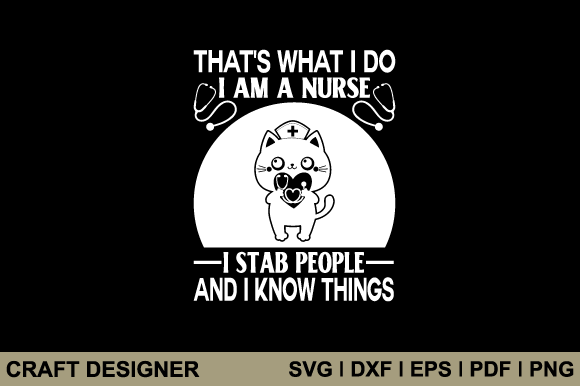
I pull up a lot of quote designs for embroidery projects, and the ones that stick are usually the ones that feel like a real person’s voice. That’s What I Do I Am a Nurse I Know Svg lands in that sweet spot immediately. It’s not a generic “nurse” graphic with a cartoon stethoscope. It’s a statement, the kind someone would actually say out loud with a tired smile after a 12-hour shift. When I first examined the file, I wasn’t looking at it as a print-cut design—though that’s how it’s delivered—I was already imagining how it would translate into thread, how the lettering would sit on a sweatshirt, and whether a customer would pick it up from a craft fair table without hesitation.
The mood is warm, a little sassy, and deeply personal. The phrase “I know things” carries a casual confidence that makes the design feel more like a handmade gift than a mass-produced slogan. For an embroidery designer, that’s gold. It means the finished product can connect emotionally, not just decorate a surface. As a machine embroidery design idea, it has the kind of personality that sells well in a small shop, on Etsy, or as a custom order for a friend’s graduation.
First Glance: The Nurse Quote That Feels Both Personal and Universal
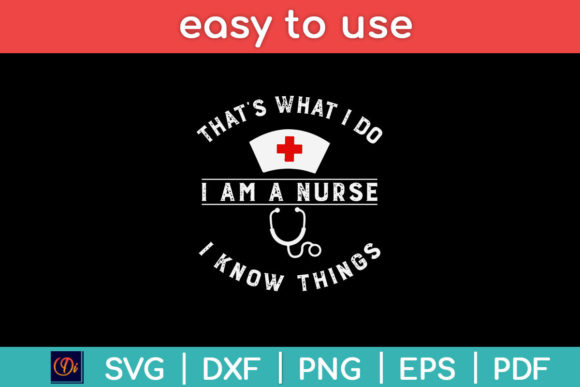
The layout is likely centered text, with “That’s What I Do” set in a simpler, slightly smaller font, and “I Am a Nurse” having more weight. The phrase “I Know Things” often carries a playful handwritten or script style, which is exactly what gives it that human touch. Because the original file is a print cut file meant for Cricut and Silhouette, the lines are clean and well-defined. That’s a massive advantage when you’re planning a stitch-out. Clean vectors mean a digitizer can trace and convert them into an embroidery file without having to guess at fuzzy edges or reconstruct poorly drawn letters.
Looking at the design as a potential applique design or as a fully stitched text piece, I immediately notice the contrast between the different font styles. If the script portions are too thin, they might need a bit of manual thickening during digitizing to hold up as a satin stitch or a subtle fill stitch. The phrase length is generous but not overwhelming—it’s a full sentence, not a single word, so it’s immediately clear what the product is about. That recognition is a huge factor in buyer engagement, especially for custom apparel and personalized gift items.
Where This Design Earns Its Keep in Embroidery Projects
I’ve been picturing That’s What I Do I Am a Nurse I Know Svg on a medium-weight tote bag, the kind a nurse carries to work with a change of shoes and a thermos. The design’s horizontal flow would sit beautifully across the front, and the text-heavy nature means it would stitch out well on a stable woven fabric. It’s also a natural fit for a sweatshirt embroidery project—cotton-poly blends work nicely with a layer of cutaway stabilizer, and the design’s size would likely fall into a 5x7 or 6x10 hoop without much fuss. That’s a comfortable range for most single-needle and multi-needle machines.
Custom Apparel and Wearable Statements
On a t-shirt, the design could become a crisp left-chest piece or a larger back print. The key is to scale it appropriately. If the script “I Know Things” gets too small, the thin strokes may disappear under a running stitch or become illegible. For a custom apparel order, I’d test the design at the intended size on a scrap of the same fabric first. A unisex crewneck sweatshirt with this quote in a soft cream thread on heather navy would feel both modern and comforting—exactly the kind of finished product that a nurse would wear on a day off or gift to a coworker.
For caps, I’d be more cautious. The design’s length makes it tricky to fit on a curved surface without distorting the lettering. I’d probably reserve it for flat surfaces like tote bags, pillow covers, or apron bibs. Speaking of aprons, a short bistro-style apron with this design embroidered across the top would be a wonderful handmade product to sell at a boutique that supports healthcare workers.
Home Décor and Giftable Items
I’ve also considered how it would look on a simple linen pillow cover. The text would feel like a quiet, affirming message in a nursery or a home office. The design could easily become a holiday embroidery gift—imagine a set of tea towels with this design stitched in a soft sage green for a nurse’s kitchen. The personalized gift angle is huge here. You can add a name or a small heart in a coordinating thread color without overwhelming the original layout. That level of customization is what makes a craft business stand out, and this SVG provides a solid foundation for that.
The Tricky Bits: What to Watch When You Stitch This Design
No design is perfect for every situation, and I always walk through the potential pitfalls before I commit to a stitch-out. The first thing I notice is the lettering size. If the original file is set up for a large print cut, the script portions might be a comfortable height. But if you scale it down to fit a 4x4 hoop, the smallest letters could easily drop below 0.25 inches. That’s where stitch density becomes a problem. Tiny satin stitches can chew up the fabric or become a lumpy mess. I’d strongly recommend testing the design on a similar fabric scrap before stitching on the final blank.
Textured fabrics like waffle weave or terry cloth are also a challenge. The design’s clean typography relies on crisp edges, and a bumpy surface will blur the satin stitch outlines. A topper might help, but I’d still lean toward smooth, tightly woven fabrics for the best clarity. On dark fabrics, white or light thread will pop, but I’d also check whether the design includes any thin internal spaces that could close up as the thread pushes through. A quick black-and-white printout of the design before digitizing can reveal those potential trouble spots.
Stretchy fabrics like performance tees or thin jersey require extra care. Without proper stabilizer, the lettering can shift and lose its shape. I’d use a medium-weight cutaway stabilizer and a temporary spray adhesive to keep everything in place. The design’s largely horizontal layout also means it’s susceptible to puckering if the fabric isn’t hooped tautly. A hoop size check is essential—make sure the design fits well within the safe area of your hoop, with at least half an inch of clearance on all sides.
Practical Embroidery Designer Notes Before You Thread Up
Over the years, I’ve learned that a few preparation steps save hours of frustration. With That’s What I Do I Am a Nurse I Know Svg, I’d approach it just like any design asset that started as a print cut file. First, I’d open the SVG in my embroidery software and check the path complexity. Simple, clean paths are easy to convert. If the script font has a lot of tight curves, I might simplify a few nodes manually to keep the stitch density even.
Thread color choice is another big decision. Because the design is a monochrome quote, contrast is everything. I’d test a few thread colors on both light and dark fabric swatches. A bright white thread on a charcoal gray sweatshirt is classic, but a muted gold or a soft blush on a cream tote bag can feel more boutique-worthy. I’d also do a quick black-and-white digital mockup—just desaturate the image—to see if the design holds its legibility without color. If it looks muddy, the fill stitch might need more density or a slightly wider letter width.
I always recommend checking the licensing terms before using a digital file for commercial embroidery. The product description says this is a print cut file compatible with Cricut and Silhouette, and it’s great for t-shirts, mugs, wall decals, pillows, and posters. That typically means it’s intended for personal and small business craft use. However, if you plan to sell embroidered products made from this design, I’d confirm whether the license covers finished physical items, and whether it extends to embroidery specifically. Most craft file licenses are flexible, but it’s worth a quick check. When in doubt, reach out to the seller or look for the commercial use terms.
Customer Perception and the Value of a Well-Chosen Design
When I think about a small shop product or an Etsy seller listing, this design immediately feels like a strong seller. The phrase resonates with nurses, nursing students, and anyone who loves a nurse. It’s authentic, not a corporate slogan. That authenticity translates into higher buyer engagement and better reviews. I’ve seen similar quote-based embroidered items become repeat sellers because they carry emotional weight. A customer who buys a sweatshirt embroidery piece with this design is likely to come back for a tote bag or a baby onesie for a new mom in the profession.
The visual appeal of the stitched outcome depends heavily on digitizing quality, but the design itself is inherently strong. It presents well in a printable mockup, which is a big plus for online sellers. A crisp, clean mockup of a tote bag with this quote in a soft thread color can stop a scroll. I’d also recommend showing the design on at least two different backgrounds—a light linen and a dark cotton—so customers can imagine it in their own space. That kind of thoughtful presentation builds customer trust and encourages a quick decision.
Final Call: Is It Worth the Stitch Test?
After walking through all the angles, I’d say That’s What I Do I Am a Nurse I Know Svg is a genuinely useful design for an embroidery-focused craft business. It’s not a complex multi-color scene, but it doesn’t need to be. The strength is in the wording and the easy, confident personality. As a digital embroidery file concept, it’s ready to be digitized and stitched onto a variety of handmade product blanks. The clean typography and straightforward layout minimize the risk of stitch defects, and the emotional hook makes it a smart addition to any embroidery project lineup.
I’d absolutely test it on a scrap of mid-weight canvas first, then move to a cotton tote or a sweatshirt. The first successful stitch-out usually becomes the shop sample that sells the next ten. For a personalized gift, a holiday embroidery piece, or a commercial embroidery line, this design has the right mix of humor, heart, and wearability. Just remember to check your hoop size, pick the right stabilizer, and always, always test on the same fabric your customer will receive. That’s the kind of care that turns a good finished product into a brand people remember.